Advanced Line Resonance Analysis (LIRA) for Cable Condition Monitoring
Line Resonance Analysis (LIRA): Next generation, non-destructive cable condition assessment
Discover the next-generation, non-destructive method for accurate cable condition assessment, designed to enhance safety and efficiency in critical infrastructures and high-risk environments.
Why choose LIRA?
LIRA excels in assessing electrical cables, even those extending for hundreds of kilometres, such as submarine cables connecting offshore platforms to the grid. This test method is especially useful for monitoring condition or pinpointing faults across vast distances without the need to energise cables to high voltages, ensuring safety in sensitive environments.

The Science Behind LIRA:
At its core, LIRA evaluates the cable's health by analysing its dielectric constant, with a special focus on capacitance measurements. This involves calculating the line impedance spectrum—both amplitude and phase—across a broad frequency domain. Reflections caused by changes in cable permittivity and radius are key to LIRA's effectiveness.
By examining standing wave patterns and impedance anomalies, LIRA provides an unparalleled ability to detect subtle changes in the cable, ensuring the reliability of your power distribution networks.
Identify Cable Faults Efficiently with LIRA:
LIRA's capabilities extend to detecting a wide array of cable faults, including:
- Global insulation degradation
- Damage due to high temperatures or radiation exposure
- Moisture ingress
- Mechanical impacts and defects
Features and Advantages of Choosing LIRA:
- Applicability to extensive cable lengths, ideal for comprehensive assessments in large-scale operations like nuclear power plants.
- Non-invasive testing, eliminating risks associated with energising cables.
- Initial cable 'fingerprinting' allows for easy identification of subsequent faults.
- Highly accurate impedance change detection and fault localization within 0.3% of the cable's length.
- Ability to discover unknown joint locations across the circuit.
*Note: For the highest sensitivity, testing from both ends of a cable is recommended to overcome some signal loss across multiple impedance changes, although this is not a necessity.
Explore our range of test methods for a deep dive into how our services can benefit your specific needs.
Assess the health of your cable assets with LIRA today. Speak to one of our experts!
FAQs — Cable Line Resonance Analysis (LIRA)
Q: What is LIRA?
A: LIRA (Line Resonance Analysis) is a non-destructive diagnostic method for assessing the condition of electrical cables — including low-, medium-, and high-voltage — by measuring the cable’s impedance spectrum (amplitude and phase) across a broad frequency band.
Q: Why use LIRA instead of traditional high-voltage cable testing?
A: Because LIRA does not require energising cables to work high voltages. Instead, it uses a low-voltage (often around 5 V) test signal, making it safer and more suitable for “high-risk” or sensitive environments.
Q: What kinds of cable issues or defects can LIRA detect?
A: LIRA can detect both global insulation degradation and localised faults, such as high-temperature damage, moisture ingress, radiation damage, mechanical stress or impact, and defects in cable joints or splices.
Q: How accurate is LIRA in locating faults?
A: LIRA can locate faults with high accuracy — typically to within about 0.3% of the total cable length.
Q: For what types or lengths of cables is LIRA suitable?
A: LIRA works for short cables up to very long lengths — even hundreds of kilometres (e.g. submarine or long-distance transmission cables).
Q: What are the advantages of doing an initial LIRA “fingerprint”?
A: Taking a baseline “fingerprint” measurement when the cable is new or known-good enables easy detection of future changes in impedance. This helps to identify when insulation degrades or a fault develops, making future comparisons and assessments more reliable.
Q: Does LIRA require cable disconnection or shutdown during testing?
A: LIRA generally requires the cable to be de-energised (i.e. not operating under full voltage) for reliable impedance measurement. It is most effective when cores are not in parallel, and ideally each core (phase) is isolated when tested.

Related Services
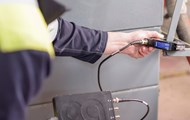
Online Cable Condition Assessment
Collect PD information from MV/HV cables with the cables are still online. Find out more here.
Offline Cable Condition Assessment
Offline partial discharge (PD) testing is a fast and accurate method of assessing cable health and locating issues, without excava...