LV Monitoring: 3 Scalable Options for Network Operators
-
09 March 2021
Electricity networks are undergoing rapid transformation. Electrification, consumer energy resources (CERs), electric vehicles, and decarbonisation targets are placing unprecedented pressure on low voltage infrastructure. Yet despite this shift, LV monitoring across secondary substations remains inconsistent, fragmented, or in many cases, minimal.
For electricity companies managing tens of thousands of substations, many installed over 40 years ago, improving visibility at the low voltage level is no small task. However, as network complexity increases, relying on limited or outdated monitoring methods introduces operational risk, planning uncertainty, and inefficiency.
When evaluating your LV monitoring strategy, there are three clear pathways to consider.
Understanding the Strategic Importance of LV Monitoring
Low voltage networks are where customer impact is felt most directly. Overloads, voltage excursions, phase imbalance, and emerging asset deterioration all occur at this level. Without reliable data, network operators are forced to rely on estimates and historical assumptions rather than real-time insight.
Effective LV monitoring enables:
- Improved network visibility
- Accurate load profiling
- Faster fault detection and localisation
- Better planning for CER integration
- Reduced outage duration
Data-driven asset investment decisions
With that context in mind, let’s explore the three options.
Option 1: Maintain the Status Quo
Doing nothing is always technically an option — but increasingly a temporary one.
Traditionally, secondary substations have relied on Maximum Demand Indicators (MDIs). These devices require manual reading, often only once per year. While low-cost, they provide very limited insight into real-world network performance.
Limitations of Basic Monitoring
MDIs:
-
Do not capture timing or duration of peak demand
-
Provide no visibility of load variability
-
Offer no fault insight
-
Cannot support dynamic planning
This creates a substantial knowledge gap. Without granular data, both operational teams and network planners are forced to make assumptions.
A technical note accompanying Evoenergy’s 2019–24 regulatory submission highlights this issue. Basic MDIs were installed to identify overload conditions, but transformers were historically designed to supply nominal LV voltage at the higher end (around 250V) — a configuration suited to traditional load-only scenarios, not modern embedded generation.
The Risk of Inaccurate Estimates
Using the sum of MDI measurements frequently overestimates feeder peak load. Corrections are required to estimate true peak flow accurately. Miscalculations distort the assessment of network capacity headroom, affecting reinforcement decisions and long-term planning.
In short, maintaining the status quo introduces guesswork into critical network decisions — precisely when certainty is needed most.
Option 2: Small-Scale LV Monitoring Trials
Over the past decade, many electricity companies have conducted LV monitoring trials to explore improved visibility.
These early initiatives were understandably small-scale. At the outset, there were limited off-the-shelf LV monitoring systems available, and utilities often developed bespoke solutions.
For example, Western Power Distribution’s Next Generation Networks project in 2016 initially trialled a bespoke monitoring solution requiring interruption of customer supply during installation — something regulators understandably prohibit. This challenge led to further evaluation of LV current sensor technologies and research into commercially viable, non-intrusive alternatives.
Lessons from Early Trials
The key outcomes of industry trials include:
-
Confirmation of the operational value of LV monitoring
-
Demonstration that non-intrusive sensor installation is achievable
-
Recognition that scalable architecture is essential
Today, the fundamental question is no longer whether LV monitoring is necessary — but how to implement it at scale.
Small-scale deployments now serve best as stepping stones toward broader rollouts rather than long-term strategies in themselves.
Option 3: Scaling LV Monitoring for Data-Driven Network Management
As networks decarbonise and decentralise, the ability to manage consumer energy resources effectively becomes critical. It has been estimated that by 2050, billions in network infrastructure investment could be avoided through smarter management of distributed generation such as solar and batteries.
This requires moving beyond static measurement toward dynamic, real-time LV monitoring.
What Scalable LV Monitoring Looks Like
Modern LV monitoring solutions enable:
- Real-time transformer and feeder data
- Continuous voltage and current measurement
- Fault detection and localisation
- Automated data analysis
- Centralised visibility across substations
- Edge intelligence for local decision-making
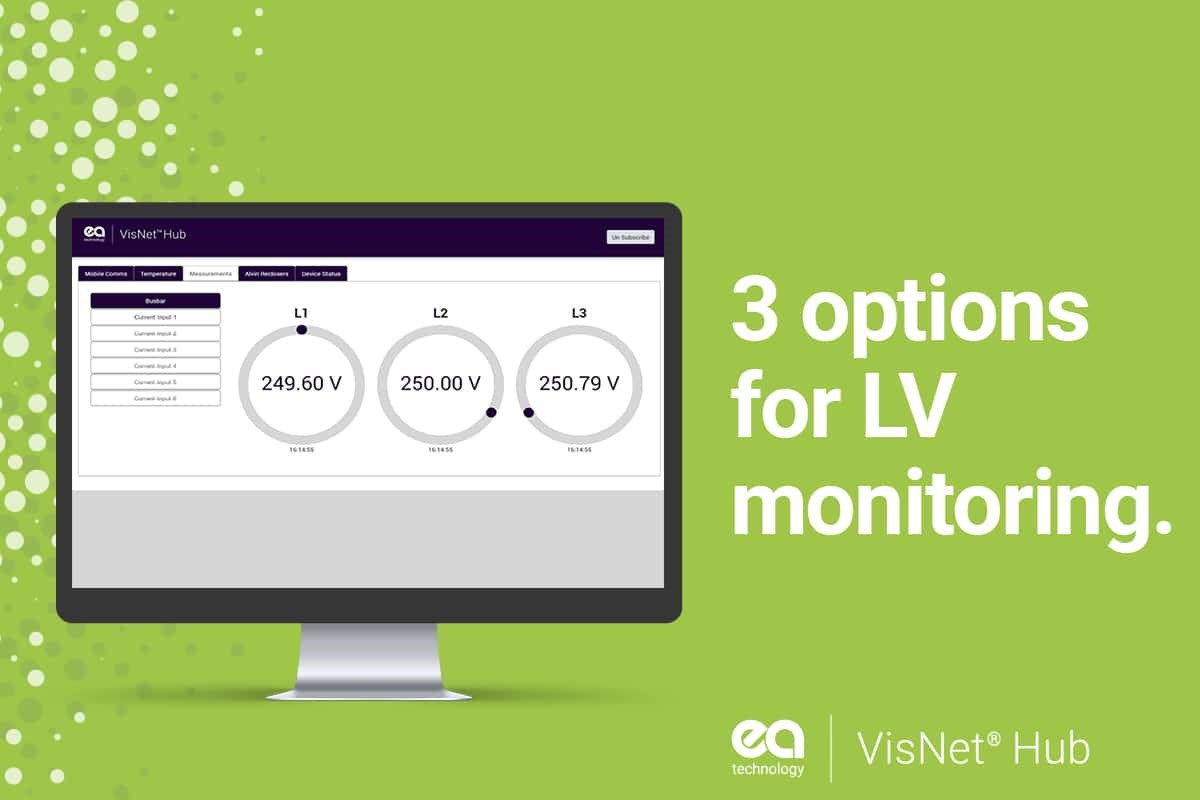
Standard, open software platforms such as VisNet® Hub now make this level of monitoring commercially viable. Designed for straightforward retro-installation, such systems avoid supply interruption and allow intelligence to be pushed to the network edge.
The goal is not simply more data, but actionable data.
From Monitoring to Intelligent Network Management
An effective LV monitoring system should:
- Provide accurate load and fault insights
- Detect emerging equipment deterioration
- Support outage management
- Reduce planning uncertainty
- Enable automated alerts for developing issues
- Support future flexibility markets and CER growth
When information is centralised and analysed automatically, utilities can shift from reactive maintenance to proactive, risk-based asset management.
Choosing the Right LV Monitoring Strategy
Selecting the right LV monitoring approach depends on network maturity, regulatory context, and long-term strategic goals.
However, a few principles apply universally:
- Avoid reliance on outdated, manual measurement tools
- Ensure solutions can scale across thousands of substations
- Prioritise non-intrusive installation
- Look for platforms that support software evolution
- Focus on automated analytics, not just raw data capture
The cost of implementing the wrong approach is significant — particularly in a rapidly evolving energy landscape.
Frequently Asked Questions About LV Monitoring
What is LV monitoring?
LV monitoring refers to the measurement and analysis of voltage, current, load, and fault data within low voltage distribution networks to improve operational visibility and asset management.
Why is LV monitoring becoming more important?
Electrification, distributed energy resources, and increased load variability mean traditional planning assumptions no longer hold true. LV monitoring provides the data needed to manage this complexity.
What are the limitations of Maximum Demand Indicators (MDIs)?
MDIs provide limited, manual, and infrequent measurements. They do not capture timing, duration, or dynamic load behaviour, making them insufficient for modern network management.
Can LV monitoring be installed without interrupting supply?
Yes. Modern sensor technologies allow for non-intrusive retro-installation, avoiding customer disruption.
How does LV monitoring reduce network risk?
By detecting overloads, voltage issues, and emerging faults early, LV monitoring reduces uncertainty, improves planning accuracy, and shortens outage duration.
Conclusion: LV Monitoring as a Strategic Necessity
In today’s decentralised and electrified energy landscape, LV monitoring is no longer optional. It is foundational to credible decision-making, network optimisation, and customer reliability.
Maintaining the status quo increases uncertainty. Small-scale trials provide learning. But scalable, real-time LV monitoring delivers the operational intelligence required for modern, resilient distribution networks.
The tools now exist to narrow uncertainty, reduce risk, and enable data-driven planning.
Learn More
Want to explore how scalable LV monitoring can strengthen your network?Discover more about VisNet® Hub, read our FAQs, or explore how real-time intelligence can support your long-term strategy.