The Future of Grid Reliability: From Reactive to Proactive
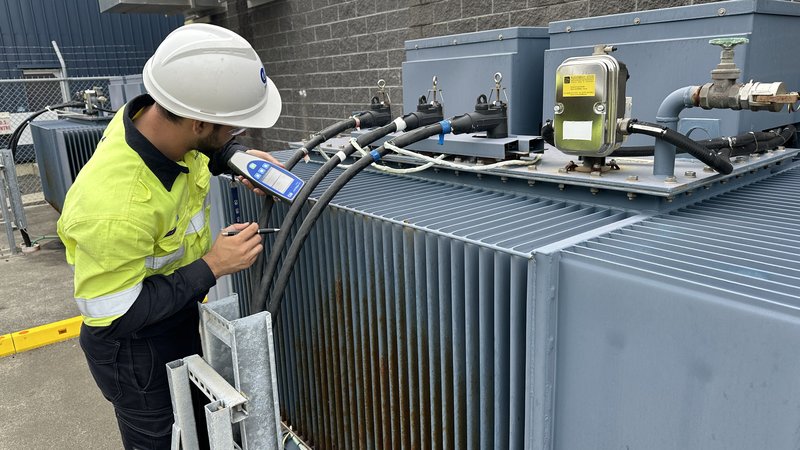
For decades, electricity distribution has been a balancing act keeping the lights on while juggling ageing infrastructure, growing demand, and minimising costs. Traditionally, Distribution Network Operators (DNOs) have been forced to respond reactively, waiting for faults to happen before fixing them. But that model is changing fast.
Today, digitalisation and edge intelligence are transforming the way networks are managed. With VisNet’s Reliability Apps, powered by the VisNet Hub, DNOs can now move decisively from reactive to proactive, maintenance from waiting for outages to predicting and preventing them.
From Fault Finding to Fault Forecasting
Every minute of network downtime costs DNOs time, money, and customer goodwill. Yet many faults are still discovered the old-fashioned way: when customers call to report power loss.
The VisNet Hub changes that equation completely. Installed across the LV network, it continuously monitors voltage, current, and waveform data in real-time. Running advanced algorithms through the Reliability Apps Suite, it can identify and locate faults as they happen and even recognise the early warning signs of future failures.
The Reactive Reliability App spots outages instantly, identifying the fault type and estimated location within seconds.
The Proactive Reliability App analyses “pre-fault” patterns, subtle electrical signatures that indicate a cable or connection is deteriorating, allowing engineers to intervene before the fault occurs.
This powerful combination means faults that once took hours to find and fix can now be anticipated, located, and addressed in a fraction of the time.
Did You Know?
80% of LV faults come from just 20% of circuits and VisNet can tell you which ones.
Customer outages can be reduced by up to 120 minutes when responding to VisNet Hub alerts.
The Proactive App can locate the exact position of an LV cable defect 32% of the time, and to within 10 m accuracy in nearly 60% of cases.
Over 50% of feeders marked as “Failure Imminent” will fault within six months.
These insights come directly from real network data proof that predictive reliability isn’t science fiction; it’s already reshaping DNO operations.
Resilience Through Insight
Resilience isn’t just about reacting quickly when something breaks, it’s about building systems that adapt, anticipate, and recover seamlessly.
By embedding intelligence at the network edge, the VisNet Hub gives operators the power to see what’s happening below the substation level, in real-time.
When the Reliability Apps detect anomalies, alerts are automatically sent to the control room, providing precise information on where to act and why.
This data-driven approach allows teams to:
Dispatch crews directly to the right location.
Prioritise assets most at risk of failure.
Reduce unnecessary excavations and wasted time.
Plan maintenance with confidence, based on evidence not guesswork.
The result? Fewer unplanned outages, lower operational costs, and improved reliability across the entire LV network.
The Power of Proactivity
In an era of rapid electrification with electric vehicles, heat pumps, and distributed renewables pushing LV networks to their limits DNOs need smarter tools to stay ahead.
VisNet’s Reliability Apps offer a clear path forward, enabling proactive management that strengthens resilience and supports the energy transition.
When faults can be predicted before they happen, resources can be targeted where they matter most.
When every Hub is an intelligent node, the network itself becomes self-aware capable of detecting risks, learning from behaviour, and adapting dynamically.
A Future-Proof Vision
The future of grid reliability is about more than fixing what’s broken, it’s about preventing what might break next.
With the VisNet Hub and Reliability Apps, DNOs can transform their approach from firefighting to foresight, from data overload to actionable intelligence, and from reactive response to proactive resilience.
Because when it comes to keeping the power flowing, seeing the fault before it happens changes everything.