What Is Partial Discharge? A Guide to Detection, Testing & Risk Management
-
12 October 2021
-
EA Technology
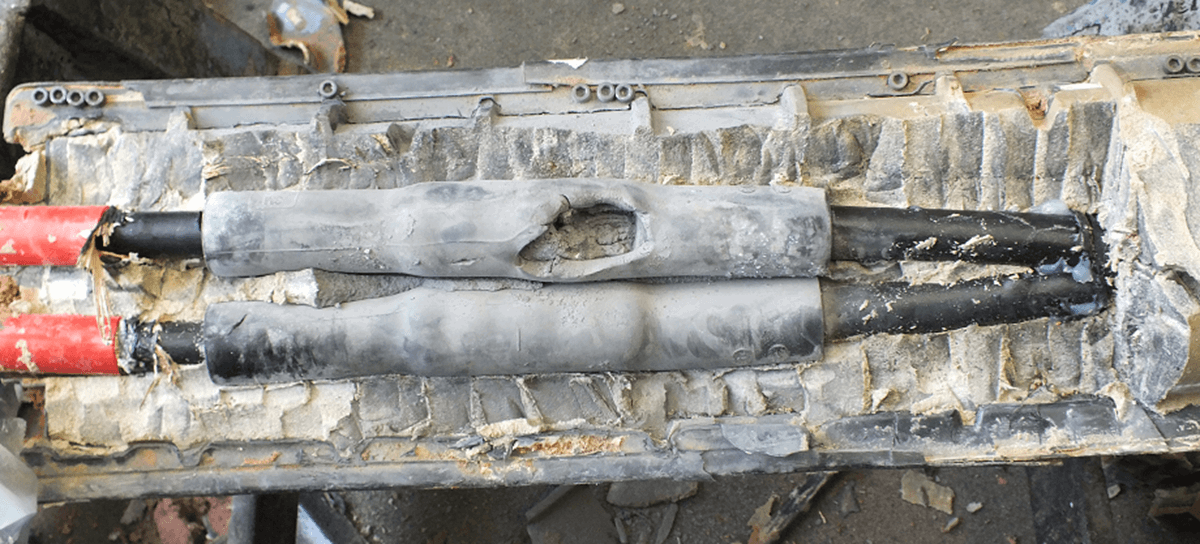
Understanding and managing partial discharge (PD) is essential for maintaining the reliability, safety, and performance of high-voltage electrical assets. Partial discharge activity is one of the earliest indicators of insulation deterioration in electrical systems, and if left undetected, it can lead to equipment failure, costly outages, and significant operational disruption.
This guide explains:
- what partial discharge is
- the common causes of PD
- the different types of discharge activity
- online and offline partial discharge testing methods
- how utilities and asset owners can reduce PD risk through proactive condition monitoring
Whether you manage substations, switchgear, transformers, or cable networks, implementing an effective partial discharge detection and monitoring strategy is critical for long-term asset management.
What is Partial Discharge?
Partial discharge is a localised dielectric breakdown within part of an electrical insulation system under high-voltage stress. Unlike a complete electrical breakdown, PD only partially bridges the insulation between conductors.
Although individual PD events are often small and difficult to detect, repeated discharge activity progressively weakens insulation over time and can eventually result in catastrophic failure.
“Partial discharge is a localised dielectric breakdown of a portion of an electrical insulation system under high-voltage stress.” – IEC 60270
Partial discharge is commonly associated with:
- insulation voids
- contamination
- moisture ingress
- surface tracking
- ageing insulation systems
- poor installation practices
As a result, partial discharge testing has become one of the most important diagnostic techniques used in high-voltage condition assessment programs.
Why Partial Discharge Matters in High-Voltage Power Systems
Partial discharge activity is a critical early warning sign of insulation deterioration in:
- switchgear
- transformers
- MV/HV cables
- rotating machines
If PD activity remains undetected, it can escalate into:
- insulation breakdown
- flashovers and arc faults
- unplanned outages
- expensive emergency repairs
- reduced asset lifespan
- safety incidents for personnel
Research published in the IEEE Transactions on Dielectrics and Electrical Insulation highlights the relationship between partial discharge activity and insulation condition assessment in high-voltage assets, reinforcing the importance of early PD detection as part of predictive maintenance and reliability strategies.
Industry experience has also demonstrated that a significant proportion of disruptive switchgear failures are linked to insulation deterioration and PD activity.
Implementing regular partial discharge surveys and monitoring programs allows asset owners to identify developing defects before failure occurs.
Learn more about our partial discharge surveys and monitoring services.
What causes partial discharge?
Several factors can contribute to the occurrence of partial discharge in electrical systems, including:
- Installation defects or poor workmanship
- Manufacturing voids within solid insulation
- Design flaws and uneven electrical stress distribution
- Moisture ingress and contamination
- Harsh environmental conditions in substations
- Thermal and mechanical stress
- Aeging infrastructure and insulation degradation
- Damaged cable terminations and loose connections
These conditions can create localised electrical stress concentrations that initiate PD activity within insulation systems.
Because insulation degradation often develops gradually over time, routine partial discharge monitoring plays a vital role in proactive condition assessment and predictive maintenance.
What are the different types of partial discharge?
Understanding the type of partial discharge present is critical for selecting the appropriate testing method and maintenance strategy.
Internal Partial Discharge
Internal PD occurs within solid or liquid insulation materials due to:
- air voids
- cracks
- imperfections
- contamination
This form of discharge is usually invisible and can only be detected using specialist partial discharge detection equipment.
Surface Partial Discharge
Surface PD occurs along the surface of insulation materials, often caused by:
- contamination
- moisture
- insulation ageing
- environmental pollution
Surface discharge may produce:
- crackling sounds
- visible tracking marks
- ozone odours
Corona Partial Discharge
Corona discharge occurs in gaseous environments around high-voltage conductors, particularly near:
- sharp edges
- connectors
- damaged insulation
- busbars
Corona PD is commonly found in outdoor switchyards and is often audible.
Correctly identifying the type of PD present helps engineers determine:
- defect severity
- likely root cause
- appropriate maintenance response
Why Early Partial Discharge Detection Matters
One of the biggest challenges with insulation deterioration is that defects often develop silently over extended periods.
Without effective partial discharge testing, organisations may not detect developing issues until:
- equipment performance declines
- outages occur
- catastrophic failures happen
Early detection enables operators to:
- reduce unplanned downtime
- improve maintenance planning
- extend asset lifespan
- enhance network reliability
- improve operational safety
- optimise maintenance investment
This is why many utilities now integrate condition assessment services into broader asset management strategies.
Explore our condition assessment services for electrical assets.
Online vs Offline Partial Discharge Testing
Modern partial discharge testing can be performed using either online or offline testing methods depending on operational requirements and asset type.
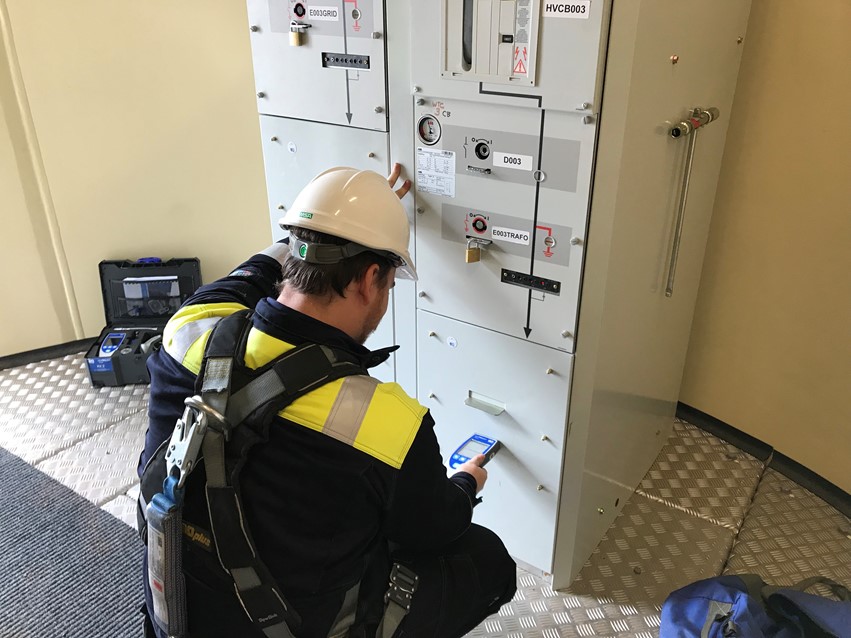
Online Partial Discharge Testing
Online PD testing is conducted while equipment remains energised and operational.
Benefits of Online PD Testing
- No shutdown required
- Minimal operational disruption
- Fast deployment for routine inspections
- Continuous condition monitoring capability
- Ideal for switchgear and substations
Recent industry research has highlighted the growing adoption of online PD monitoring because it enables continuous asset assessment and long-term trend analysis without requiring operational outages.
Online testing is commonly used for:
- switchgear
- transformers
- substations
- rotating machines
Offline Partial Discharge Testing
Offline PD testing requires the equipment to be de-energised during testing.
Benefits of Offline PD Testing
- More detailed fault localisation
- Higher sensitivity for cable diagnostics
- Comprehensive insulation analysis
- Enhanced defect identification capability
Offline testing is particularly effective for:
- MV/HV cable systems
- acceptance testing
- detailed insulation diagnostics
Explore our offline cable PD mapping services for detailed analysis of MV and HV cable networks.
Common Partial Discharge Detection Techniques
Timely and accurate partial discharge detection is critical for effective electrical asset management.
Several sensor technologies are used depending on the equipment and testing environment.
Transient Earth Voltage (TEV) Sensors
TEV sensors detect electromagnetic signals generated by internal PD activity within metal-clad switchgear.
These are widely used during:
- switchgear condition assessments
- online PD surveys
- routine inspections
Ultrasonic Sensors
Ultrasonic detectors identify acoustic emissions associated with:
- surface discharge
- corona activity
- air insulation defects
They are highly effective in noisy industrial environments.
High-Frequency Current Transformers (HFCT)
HFCT sensors detect high-frequency current pulses linked to PD activity in:
- cable terminations
- earth connections
- cable accessories
Ultra High Frequency (UHF) Sensors
UHF sensors are widely used in:
- gas-insulated switchgear (GIS)
- enclosed HV systems
A comprehensive review published in Sensors highlights the increasing adoption of UHF and RF sensor technologies for online partial discharge detection due to their strong sensitivity and excellent noise rejection performance.
Advanced Partial Discharge Analysis Techniques
Modern PD diagnostics extend far beyond simple discharge detection.
Advanced analysis techniques such as:
- phase-resolved partial discharge (PRPD) analysis
- waveform analysis
- pulse repetition pattern analysis
- frequency spectrum analysis
…enable engineers to:
- distinguish true PD from electrical noise
- classify defect types
- assess severity
- monitor insulation deterioration trends
Studies comparing IEC 60270 and radio-frequency PD analysis techniques have shown that combining multiple diagnostic approaches can significantly improve defect classification accuracy and provide deeper insight into insulation conditions.
Accurate phase-resolved PD pattern recording is particularly important for reliable diagnostics.
Managing Partial Discharge in High-Voltage Systems
To reduce the risks associated with insulation deterioration, organisations should implement a proactive and structured PD management strategy.
Regular Partial Discharge Monitoring
Routine inspections and continuous monitoring programs help identify developing defects before failure occurs.
Modern technologies such as the UltraTEV Plus² enable efficient and repeatable field testing.
Learn more about the UltraTEV Plus² partial discharge detector.
Preventive Maintenance
When PD activity is identified early, corrective action can be taken before severe insulation damage develops.
This helps reduce:
- emergency repairs
- outage costs
- asset replacement expenditure
System Upgrades and Insulation Improvements
Modern insulation materials and improved equipment design can significantly reduce the likelihood of PD activity.
Compliance with International Standards
Effective PD testing programs should align with recognised industry standards including:
- IEC 60270
- IEEE 400.2–2013
- IEC 60060-2
These standards support consistent and reliable high-voltage testing methodologies.
Benefits of Proactive Partial Discharge Testing
Implementing a proactive partial discharge monitoring strategy delivers several operational advantages:
- Detect insulation defects earlier
- Reduce unplanned outages and downtime
- Improve network reliability and resilience
- Extend asset operational lifespan
- Optimise maintenance planning and investment
- Improve personnel safety
- Support predictive maintenance initiatives
- Reduce lifecycle costs of HV assets
As electrical networks become increasingly critical and interconnected, proactive PD testing becomes even more important for long-term asset reliability.
Industry Research & Standards
Partial discharge testing and condition assessment methodologies continue to evolve through ongoing international research and standards development.
Key industry references include:
- IEC 60270 – Partial discharge measurement techniques
- IEEE 400.2–2013 – Guide for field testing shielded power cable systems
- IEC 60060-2 – High-voltage testing procedures
- CIGRE guidance on online PD monitoring and GIS diagnostics
Recent industry research has demonstrated the growing role of:
- online PD monitoring
- RF and UHF detection methods
- PRPD analysis
- machine learning-assisted PD classification
- predictive analytics for asset management
These developments are helping utilities improve fault detection accuracy, strengthen predictive maintenance programs, and make more informed asset management decisions.
Frequently Asked Questions (FAQ)
What is partial discharge in electrical systems?
Partial discharge is a localised insulation breakdown within high-voltage equipment. It is an early warning sign of insulation weakness that can eventually lead to equipment failure.
Why is it important to test for partial discharge?
Early detection helps prevent equipment failure, avoid outages, and reduce repair costs by identifying insulation defects before they escalate.
How is partial discharge detected?
PD can be detected using:
- TEV sensors
- ultrasonic sensors
- HFCT sensors
- UHF sensors
Testing may be conducted online (while energised) or offline (during planned outages).
Which standards are followed in partial discharge testing?
Key standards include:
- IEC 60270
- IEEE 400.2–2013
- IEC 60060-2
These standards define best practices for high-voltage testing and PD measurement.
Further Readings:
- Why Phase Locking Is Critical to Accurate PRPD Pattern Recording
- Calibration and Repair Services for PD Equipment
- Offline Cable Partial Discharge Mapping
- Partial Discharge Testing Frequency: How Often to Test for PD?
Improve Your Partial Discharge Detection Strategy
EA Technology provides industry-leading partial discharge testing, monitoring, and condition assessment solutions for high-voltage electrical assets.
Our services help organisations:
- detect insulation defects earlier
- improve network reliability
- reduce operational risk
- optimise maintenance planning
- extend asset lifespan
Whether you require:
- online PD testing
- offline cable diagnostics
- switchgear condition assessment
- permanent monitoring solutions
…our specialists can help you build a more proactive and data-driven asset management strategy.
Explore our partial discharge monitoring services
Learn more about high-voltage condition assessment solutions
Contact our team to discuss your PD testing requirements
Conclusion
Partial discharge poses a significant threat to high-voltage electrical systems, but with the right monitoring and management approach, its impact can be significantly reduced.
By understanding:
- the causes of PD
- the different types of discharge activity
- the available detection techniques
- the importance of proactive monitoring
…asset owners can improve reliability, reduce operational risk, and support long-term network performance.
Download our comprehensive Partial Discharge Guide (PDF) for additional insights, testing recommendations, and condition assessment best practices.
